Introduction
Separation and divorce can be emotionally overwhelming and legally complex. If you live in British Columbia, it’s important to understand the laws that apply to your situation, whether you are legally married or in a common-law (marriage-like) relationship. This guide explains the Divorce Act, the Family Law Act, and what steps you should take to protect yourself, your children, and your financial future.
Divorce Act (Canada) – For Married Couples
The Divorce Act is federal law that applies when legally married spouses want to end their marriage.
Family Law Act (British Columbia) – For Married and Common-Law Couples
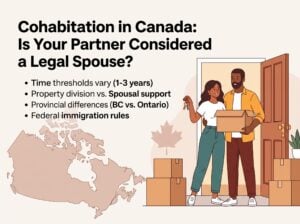
The Family Law Act applies to both married couples and those in a marriage-like relationship for at least two years, or with a child together.
Key areas include:
Separation in British Columbia – When Does It Begin?
In BC, you don’t need a formal “legal separation” order. Separation occurs when one or both spouses decide the relationship is over and begin living separate lives.
- Date of Separation: This date is important for property division, spousal support, and eligibility for divorce.
- Living Under the Same Roof: Couples can be separated even if they still share a home, as long as they stop living as spouses (e.g., separate bedrooms, finances, and routines).
Practical Steps if You’re Facing Separation or Divorce
Married vs. common-law determines which laws apply.
Impacts property division and divorce timelines.
Gather financial records, assets, debts, and income statements.
Parenting plans and child support must be reasonable and in the child’s best interests.
This can settle property, support, and parenting without lengthy litigation.
Independent legal advice ensures your rights are protected.
Divorce is handled in the BC Supreme Court; support and parenting matters can also be addressed in Provincial Court.
FAQs About Separation and Divorce in BC
Why Speak to a Divorce Lawyer in British Columbia?
Separation and divorce involve complicated financial, parenting, and emotional issues. A lawyer can:
- Explain your rights and obligations under the Divorce Act and Family Law Act
- Help you draft or review a legally binding separation agreement
- Represent you in court proceedings, if necessary
- Ensure that child support and spousal support arrangements are fair and enforceable
- Protect your long-term financial and legal interests
Internal Linking Suggestions



0 Comments